Your rules. One core.
Catalog, pricing, orders and stock share one commerce core, and you can still extend it. Host custom business logic inside the platform, and tell your ERP, warehouse and finance systems what happened with signed webhooks.
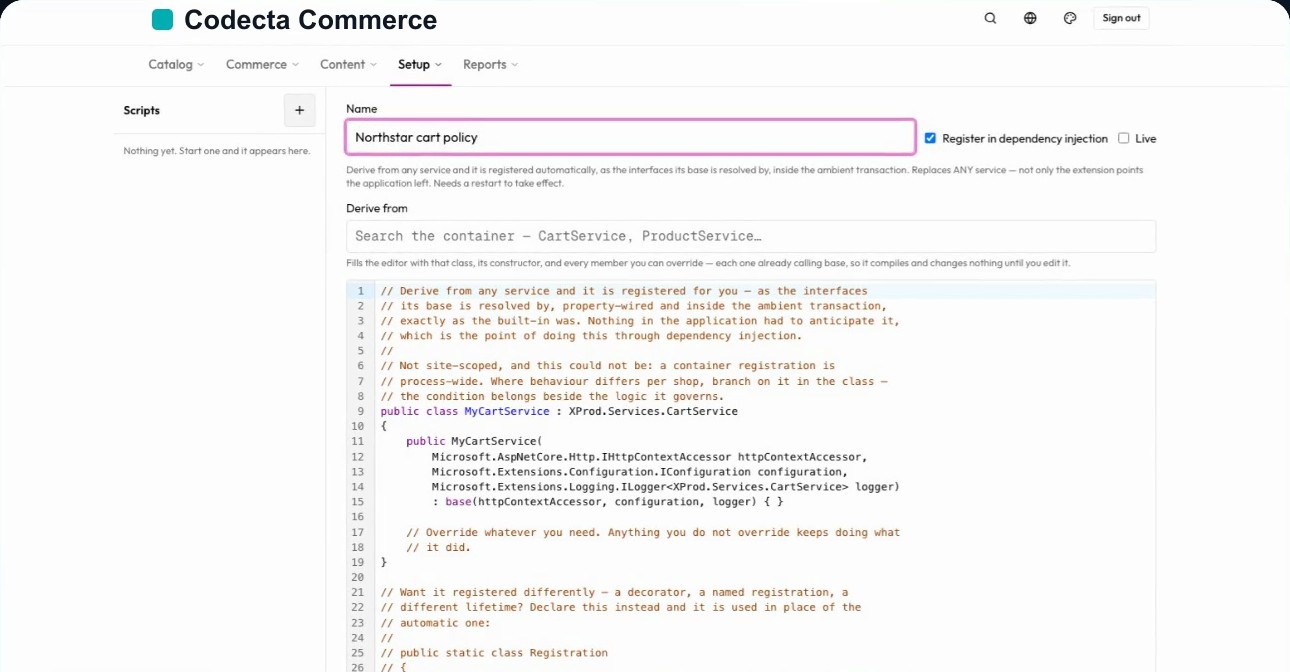
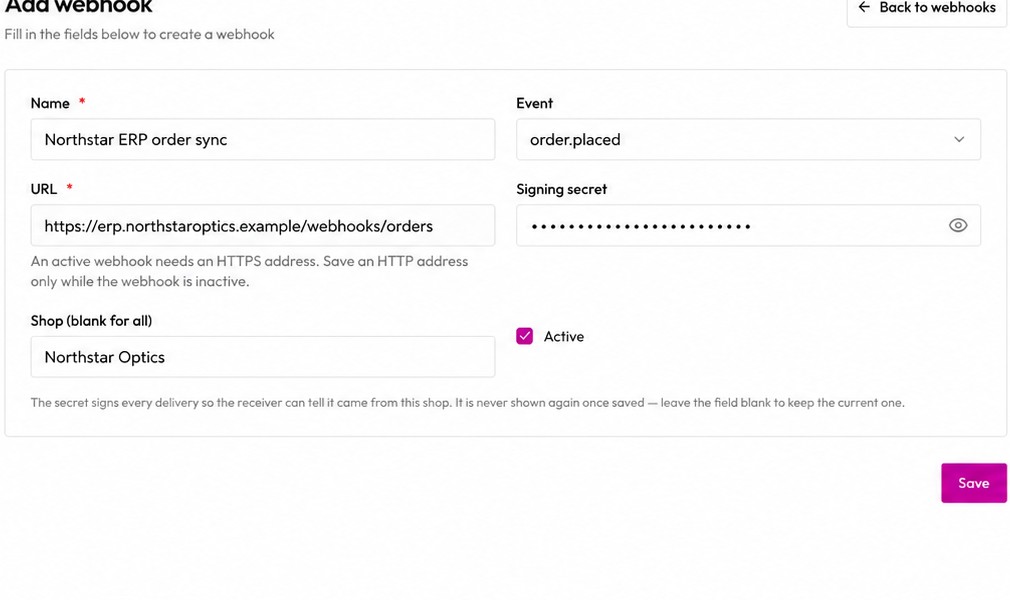
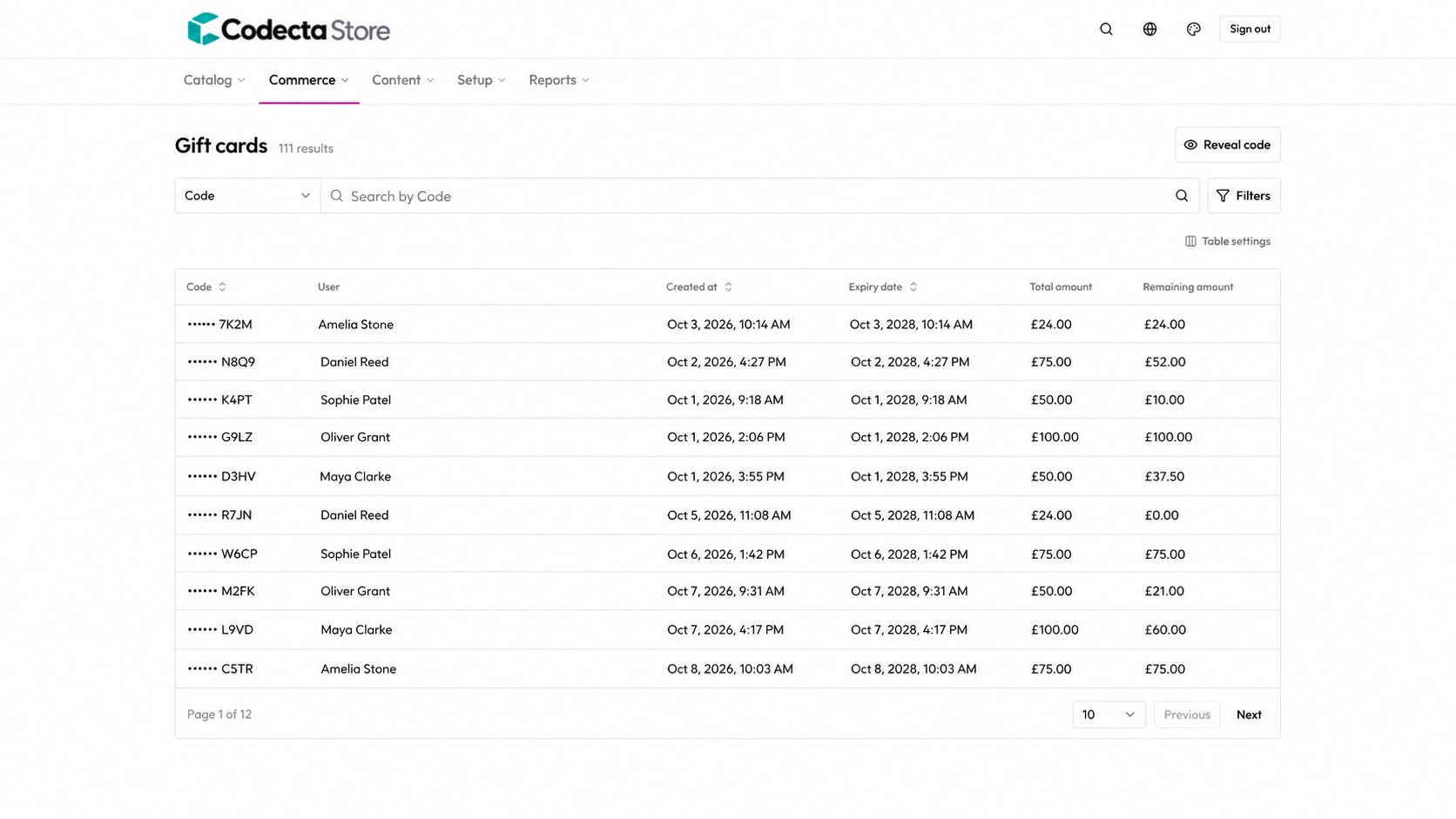
Write custom business logic in a real editor, inside the platform.
Tell your ERP, warehouse and finance systems when something happens.
A unit held for a shopper in checkout stays held when stock changes.
Custom business logic, hosted for you.
When your business needs something special, your team has a script workbench inside the platform. Derive from a built-in service and change only the part you need; everything you do not override keeps working as before.
- Checked before it goes live: a script is compiled on save and refused if it will not build, so a typo is found by the author, not at checkout.
- Picked up without a release: a saved script reaches every API instance within seconds.
- Behind its own permission: scripts run with full access to the platform, so writing one is a separate permission from ordinary back-office editing.
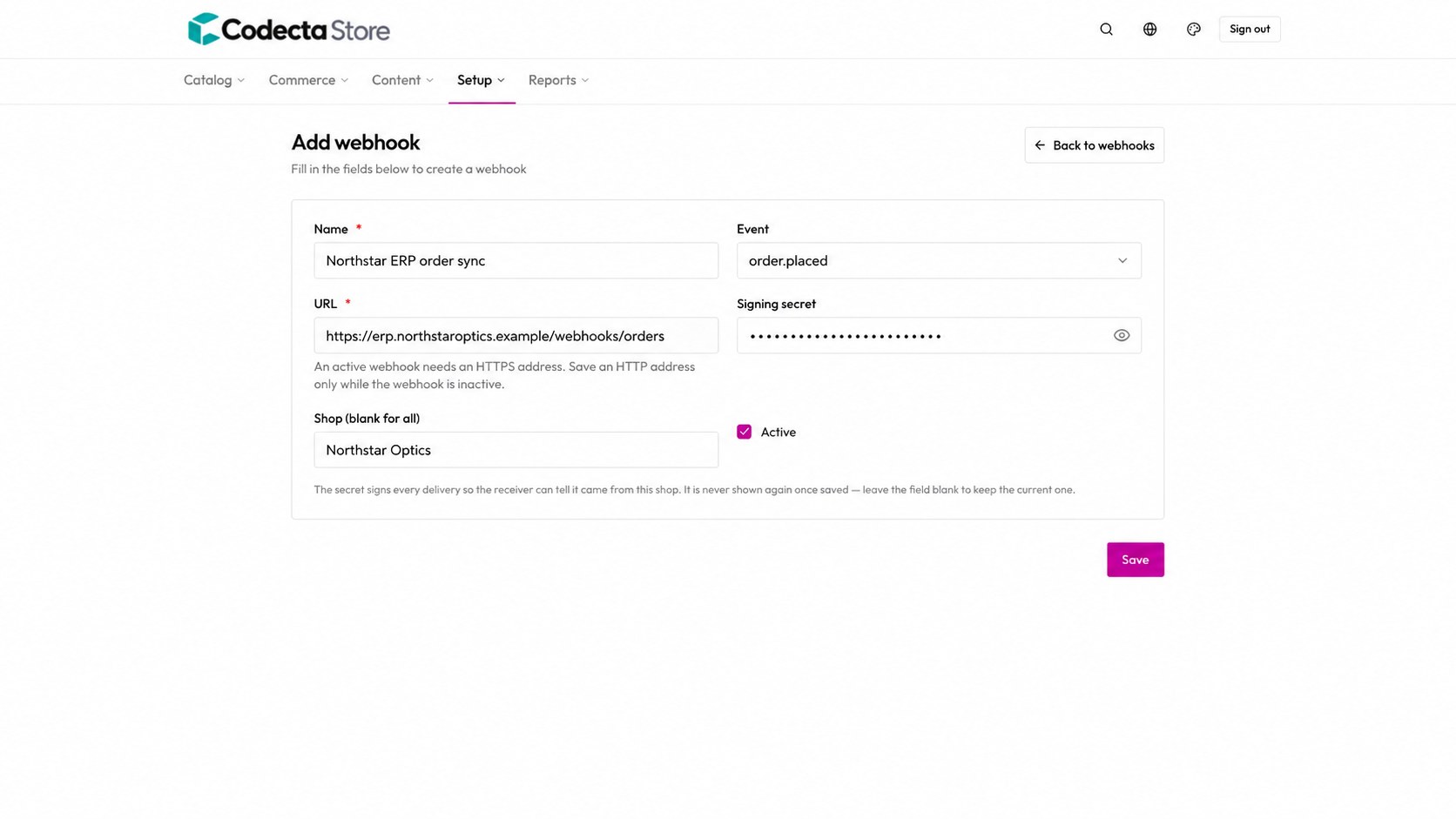
Tell your ERP when an order is placed.
Configure a webhook for an event such as order placed, point it at your system and sign it with a secret. Deliveries go through a persisted outbox with retries, so a brief outage on the receiving side does not lose the event.
- Simple to configure: choose the event, the URL, an optional shop scope and a signing secret, then switch it on.
- Visible deliveries: see delivery attempts for each subscription and replay one when you need to.
- Real extension points: we do not promise a one-click connector for every system. We build your ERP, warehouse or finance connection with you.
A reserved unit stays reserved.
A shopper has the last unit reserved in checkout just as a warehouse sync reports a new stock count. If that update wiped the local hold, you could sell the same unit twice. Codecta Commerce keeps external stock and active reservations distinct, and reports the true available-to-sell number.
- Holds are first-class: a reservation has its own lifecycle, separate from the stock figure your warehouse reports.
- Stock updates do not erase holds: a sync changes the external number and leaves the reservations alone.
- Exchanges hold stock too: a replacement order pins its own hold, so it is not swept away while the shopper waits.
Stock and holds stay distinct.
The first shopper completes checkout. The next shopper sees the truth before they fall in love with it.
Warehouse changes mid-checkout.
The core stays connected, without a chain of plugins between the shop and your back-office systems.
A shopper reserves the last unit
The reservation is recorded against the stock.
A warehouse sync lands
External stock updates and the reservation stays in place.
The order is placed
Checkout completes against the reserved unit.
Your ERP is told
A signed webhook announces the order to your system.
Bring us your hardest integration.
Tell us the systems around your shop. We will show how they connect in a tailored demo.