A return can be a return visit.
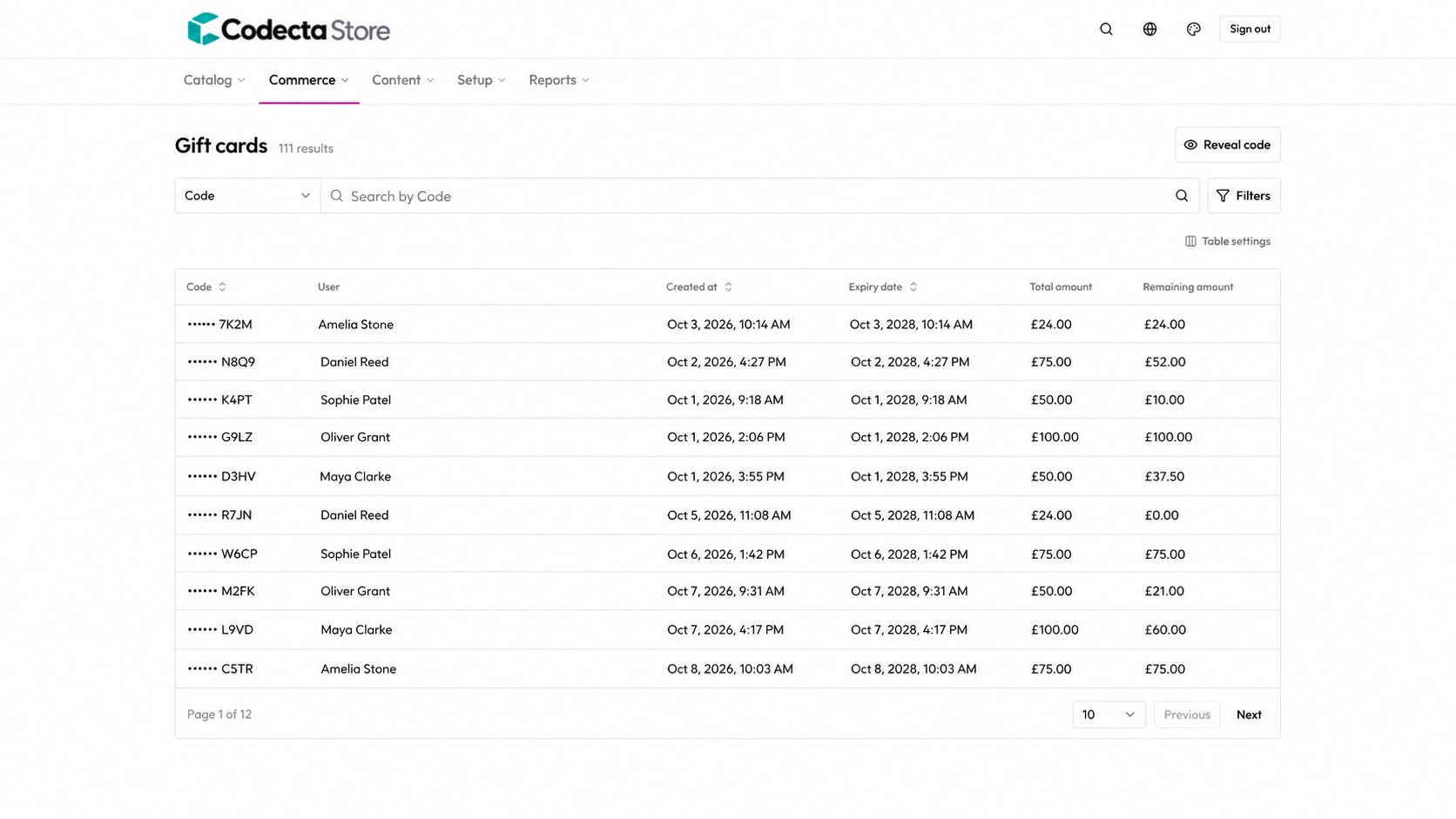
The experience carries on after the sale. At the returns desk, choose the original payment method or store credit. Credit is issued as a gift card the customer can spend straight away, and loyalty gives them another reason to come back.
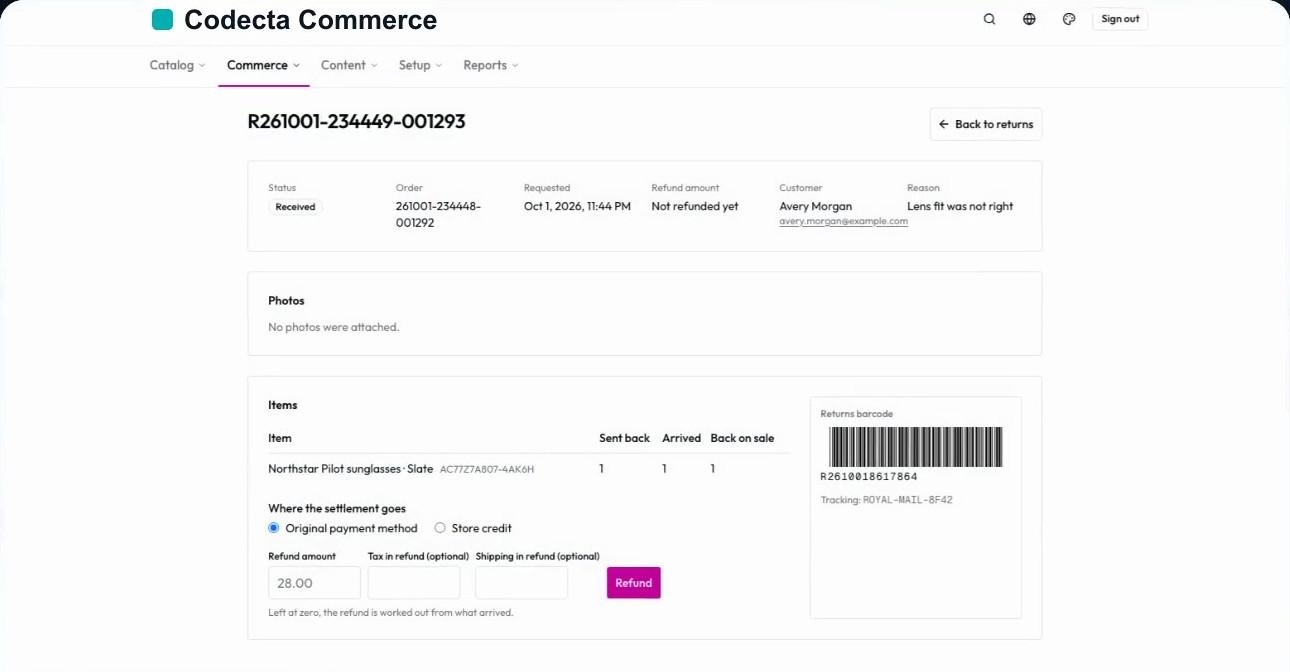
Choose where the money goes when an item comes back.
Store credit arrives as a gift card the customer can use straight away.
Earn rules reward the next purchase and reverse correctly on a refund.
Decide where the money goes.
When a return arrives, the desk chooses the settlement: back to the original payment method, or store credit. Everything the desk needs is on one screen, from the items sent back to the tracking reference.
- Refund or store credit: one choice at the desk, with the refund amount, tax and shipping all visible.
- Evidence up front: a return needs three to five photos, enforced by the platform rather than only by the form.
- Ask for more: put a return on hold to ask the shopper for more information, then pick it up when they reply.
Store credit they can spend straight away.
Credit is issued as a gift card, so the customer does not wait for a bank refund to be able to shop again. A return can also settle in goods, when a shopper simply needs a different size or colour.
- Money, treated as money: a card is spent one order at a time and cannot go negative, even if two orders reach it together.
- Returned goods restore the card: if a card paid for the goods, the returned share goes back onto the same card.
- Exchanges: a same-price swap moves no money at all, and a price difference is settled explicitly in the direction it falls.
Another reason to come back.
Configure earn rules to reward the next purchase. The ledger is a financial record from its first row, so a balance is always the sum of what happened, never a number that can drift.
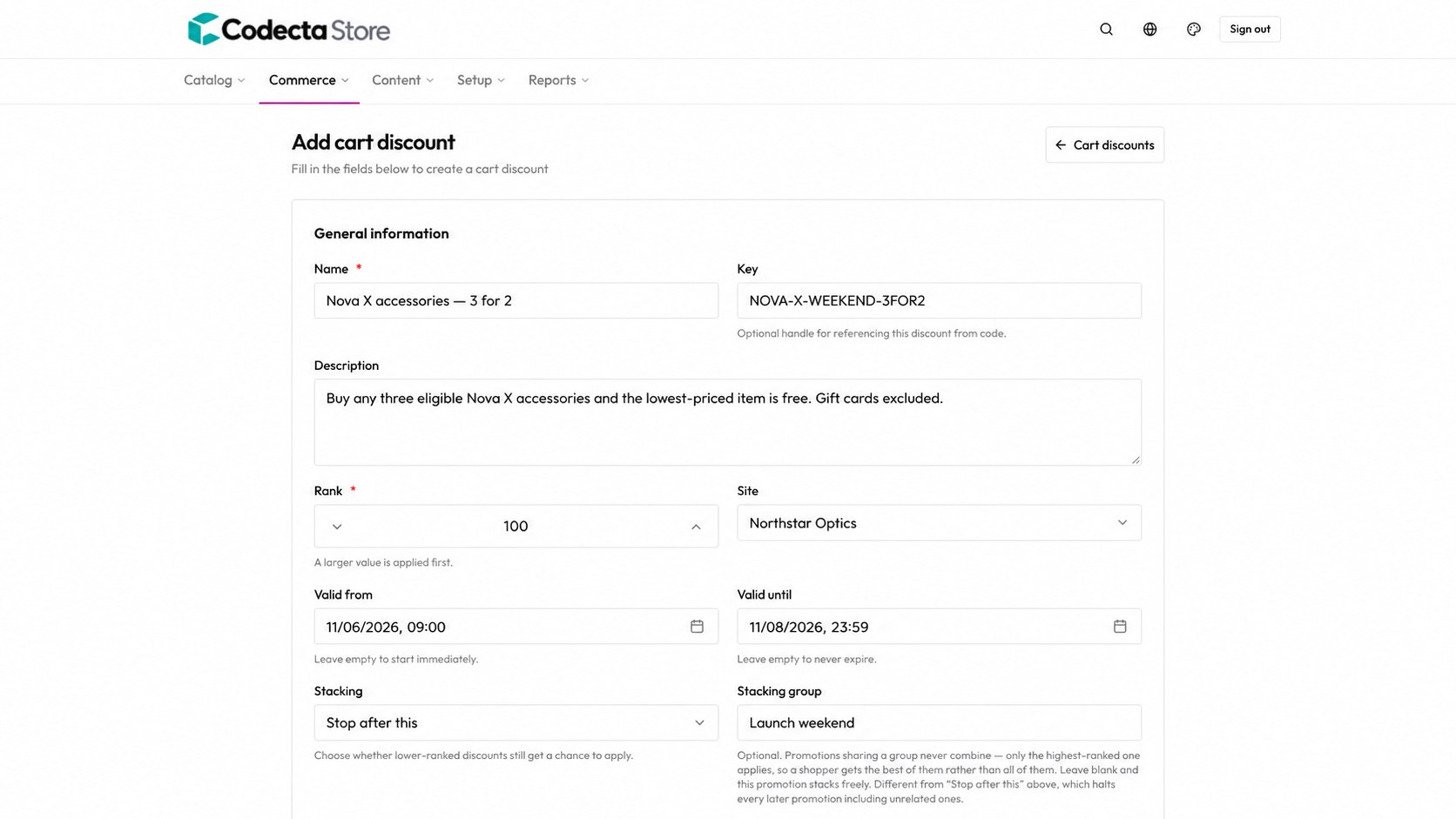
- Rules with dates: a rate is a rule with a validity window, so a double-points weekend ends by itself.
- Earned on what was paid: points are earned on the discounted goods total, not on postage, so a promotion does not pay twice.
- Reversed on refund: a refunded return takes back the points it earned, and goods still in transit are not penalised.
Every movement is a row
Points on an order that can still be returned are not spendable until they mature.
A return becomes the start of the next visit.
Because returns, gift cards and loyalty share one core, the credit and the points are already where the shopper can use them.
The shopper starts a return
Photos and a reason travel with the request.
The desk chooses the settlement
Original payment method or store credit.
Credit is issued as a gift card
Ready to spend straight away.
Loyalty brings them back
The next purchase earns points under your rules.
Turn returns into your next sale.
Bring your returns policy and we will show it running end to end in a tailored demo.